What happens when a man’s greatest desire becomes the very thing threatening to destroy his marriages, while somewhere far away, a young orphan is struggling to survive in a home where cruelty has replaced compassion?
Aliyu has wealth, influence, education, and more than one wife, yet none of these things can protect him from a private struggle that has followed him since adolescence. His unusual condition affects his relationships, his marriages, and eventually the women who are expected to live with him. As jealousy begins to grow between his wives, a question becomes impossible to ignore: how much can love endure when one person’s needs become another person’s burden?
At the same time, Shatu is fighting an entirely different battle. Poor, vulnerable, and treated harshly by the woman who should protect her, she dreams of escaping a life of hunger, accusations, humiliation, and constant punishment. When an unexpected marriage proposal appears to offer her a way out, she must decide whether she is choosing freedom or simply exchanging one difficult life for another.
Two lives. Two very different forms of suffering. And a story in which love, marriage, family, poverty, jealousy, faith, and human weakness are destined to collide.
Summary
Halak Dina introduces Aliyu, a wealthy young businessman whose comfortable life hides a deeply complicated personal struggle. Coming from a prosperous family involved in the gold business, Aliyu grows up surrounded by privilege and affection. His mother, Mommy, devotes herself to raising him and his younger sister after the sudden death of his father. As Aliyu grows older, however, he begins experiencing powerful physical desires that he does not fully understand. His attempts to find answers lead him to teachers, doctors, religious advice, and eventually to marriage.
Aliyu’s condition becomes one of the central conflicts of his adult life. Marriage does not immediately solve the problem. Instead, it introduces another layer of difficulty because the women in his life must cope with demands that are far beyond what they expected from married life. His wives have different personalities and different ways of responding to him, but jealousy gradually becomes unavoidable. The arrangement forces them to confront questions about affection, fairness, intimacy, and the meaning of marital responsibility. What begins as an attempt to find a solution slowly develops into a complicated emotional struggle between the people living under the same roof.
Aliyu’s story becomes even more complicated when his mother arranges another marriage for him. The decision is made because the family believes marriage may provide an answer to his continuing problem, but the new bride, Hafsat, is young and inexperienced. Instead of approaching marriage with maturity, she enters the household carrying the influence of her upbringing and her mother’s instructions. Money, secrecy, manipulation, and family interference soon become additional sources of tension. Aliyu finds himself dealing with a marriage that does not resemble the solution he imagined.
While Aliyu battles problems created by wealth, marriage, and an uncontrollable personal struggle, Shatu lives at the opposite end of society. She is an orphan who has been left vulnerable in the care of a harsh guardian. Hunger is part of her daily existence, and even ordinary responsibilities become difficult because she lacks the security and affection a child should receive. Lawandi, who repeatedly shows concern for her, becomes one of the few people who offers her kindness without demanding anything in return. Yet even that friendship attracts suspicion and accusations.
Shatu’s situation eventually reaches a point where Baffa, worried about her future and frightened by the treatment she receives at home, considers marriage as the only practical way to remove her from the environment. Alh Manu becomes a possible husband, but the decision is far from simple. Shatu has feelings, fears, memories, and unanswered questions of her own. Meanwhile, the discovery of a major development connected to the land where she lives threatens to bring another unexpected turn into her life. As Aliyu’s household becomes increasingly unstable and Shatu approaches a life-changing decision, their separate stories move toward a future neither of them could have anticipated.
Genre and Setting
Halak Dina is a mature Hausa romance and family drama built around marriage, interpersonal conflict, emotional tension, poverty, wealth, family expectations, and difficult personal circumstances. The story moves between the affluent environment of Maiduguri and the harsher realities of rural life around Biu. This contrast gives the novel two distinct worlds.
Aliyu’s world is filled with large homes, business interests, family wealth, modern conveniences, and social influence. Shatu’s world is defined by poverty, household labour, hunger, village life, and the struggle to obtain even basic security. By placing these environments alongside each other, the story explores how suffering can exist in completely different forms regardless of a person’s financial position.
Core Themes
Marriage and Responsibility
Marriage is at the heart of Halak Dina. The novel questions what happens when people enter marriage without completely understanding the responsibilities attached to it. Aliyu’s experiences demonstrate that wealth and physical attraction cannot automatically create a peaceful marriage. His wives are forced to confront the emotional consequences of sharing a husband whose needs are unusually demanding.
Jealousy and Rivalry
The presence of multiple wives creates an atmosphere where affection becomes something everyone watches closely. Differences in appearance, attention, emotional connection, and perceived favouritism create tension. The novel examines how jealousy can begin quietly before turning into open conflict.
Poverty and Survival
Shatu’s storyline provides a stark picture of deprivation. Her struggle is not simply about lacking money. It is about lacking protection, dignity, food, emotional security, and someone willing to stand firmly in her corner. Her circumstances make every decision about her future extremely important.
Family and Protection
The novel repeatedly asks what family responsibility really means. Mommy tries to protect Aliyu, while Baffa worries about the future of Shatu. At the same time, other relatives sometimes become sources of pressure rather than protection. The story therefore presents family as both a place of refuge and a possible source of conflict.
Faith and Guidance
Religion appears throughout Aliyu’s journey and Shatu’s life. Aliyu seeks guidance about his personal struggle, while Shatu turns to prayer and istikhara when faced with a major decision. These moments add another dimension to the characters’ choices as they attempt to understand what is happening in their lives.
Love Versus Circumstance
The novel repeatedly places love against circumstances that are difficult to control. Shatu must consider whether marriage can give her the peace she has been denied. Aliyu must discover whether affection alone can hold his complicated household together. The answers are not presented as simple ones.
Key Characters
Aliyu is a wealthy businessman whose seemingly privileged life conceals a personal struggle that has affected him since adolescence. His condition shapes his relationships and becomes the central challenge of his marriages. Although he has considerable wealth and social influence, he discovers that money cannot simply eliminate every problem.
Naima is one of Aliyu’s wives and appears deeply connected to him. Her relationship with him becomes particularly important because she believes she understands how to satisfy his needs better than the others. Her confidence, however, exists alongside the jealousy and competition created by the presence of the other wives.
Najla is another of Aliyu’s wives. She observes the situation around her and experiences the frustrations that come with sharing her husband. Her interactions with Naima reveal the complicated mixture of rivalry, exhaustion, humour, and cooperation that develops between the women.
Hafsat enters Aliyu’s life under circumstances that are intended to provide a solution to his struggle. Young and heavily influenced by her mother, she approaches marriage with a very different understanding from the people around her. Her behaviour soon creates new complications within the household.
Mommy is Aliyu’s mother and one of the strongest figures in his background. After losing her husband, she dedicates herself to raising her children. Her concern for Aliyu leads her to search for solutions to his condition, even when those solutions create difficult questions of their own.
Shatu represents the novel’s most vulnerable perspective. An orphan living under harsh conditions, she works, suffers hunger, and endures repeated humiliation while hoping for a better future. Her kindness toward Lawandi and her reliance on prayer reveal a character who remains emotionally resilient despite her circumstances.
Lawandi is one of the few people who consistently shows Shatu compassion. He helps her during difficult moments and appears to care deeply about her, although his feelings are complicated by the realities surrounding her.
Baffa becomes an important protector in Shatu’s life. He is troubled by the way she is treated and fears that leaving her in the same environment could expose her to even greater danger. His consideration of marriage for Shatu comes from a desire to find her a safer future.
Inna is Shatu’s harsh guardian. Her treatment of Shatu creates one of the novel’s most painful conflicts. Suspicion, anger, accusations, and constant demands shape their relationship, leaving Shatu desperate for a way out.
Analytics and Insight
At its core, Halak Dina is built around two contrasting forms of captivity. Aliyu is surrounded by wealth but struggles to control a powerful personal problem that repeatedly interferes with his relationships. Shatu has almost none of the material advantages Aliyu possesses, yet her greatest struggle is finding a path away from poverty and mistreatment.
The novel also uses marriage as a meeting point between personal desire and responsibility. Aliyu believes marriage can provide an answer to his problem, but every new relationship creates consequences for another person. His wives are not simply supporting characters in his struggle. They have their own emotions, needs, insecurities, and limits.
Shatu’s storyline provides the emotional counterweight to Aliyu’s world. Her suffering demonstrates that marriage can look like freedom to someone trapped in poverty, yet the novel leaves readers questioning whether any marriage should be viewed as an escape without considering what comes afterward.
Another important element is secrecy. Characters hide feelings, conceal intentions, misunderstand one another, and make decisions without revealing the complete truth. These secrets continually create new questions. The discovery of Aliyu’s past, the history of the women he married, Shatu’s family background, and the consequences of the land dispute all suggest that the characters have not yet reached the most important revelations.
What Makes the Story Intriguing
The novel does not rely on a single conflict. Several storylines move simultaneously. Aliyu’s struggle develops inside a wealthy household where jealousy is growing. Hafsat’s arrival introduces another unpredictable element. Shatu remains trapped in a completely different environment where hunger and cruelty threaten her future. Lawandi’s feelings add another emotional complication, while Baffa’s attempt to arrange Shatu’s marriage creates a decision that could permanently change her life.
The greatest suspense comes from the questions surrounding these characters. Can Aliyu’s marriages survive the pressure created by his condition? Will his wives continue tolerating the situation? What happened to the women he married before his current wives? Will Shatu accept Alh Manu, and if she does, will the marriage truly give her the peace she seeks? What lies behind Shatu’s family history? And what happens when the land connected to her village becomes involved in a major project?
Each answer threatens to create another question.
A Quote to Capture the Novel
“Sometimes the life a person dreams of escaping is not the hardest part. The hardest part is discovering whether the door opened for freedom or merely led to another prison.”
Final Insight
Halak Dina is ultimately a story about people searching for relief in very different ways. Aliyu searches for an answer to a problem that has followed him for years. His wives search for security, affection, and recognition within a difficult marriage. Shatu searches for dignity and a life beyond constant suffering. Their journeys reveal how easily love can become tangled with responsibility, jealousy, family pressure, poverty, and personal weakness.
Behind the romance and family drama lies a deeper question about what people are willing to endure in the hope of finding a better life. For Aliyu, the answer may lie in understanding himself rather than simply adding another marriage. For Shatu, it may depend on whether the person who offers her a new life can truly protect the dignity she has been denied.
And as their stories continue, the choices already made may prove to be only the beginning.




![<? $row['name']; ?>](https://readhausanovels.com/Public/thumb/225x325/ebook/2026/04/auto-76-rayuwa-da-gi-i-complete-hausa-novel-352955a393.webp)
![<? $row['name']; ?>](https://readhausanovels.com/Public/thumb/225x325/ebook/2026/04/auto-78-karuwan-cikin-gida-book-2-complete-hau-fb4ccbf490.webp)
![<? $row['name']; ?>](https://readhausanovels.com/Public/thumb/225x325/ebook/2026/04/auto-79-ar-goggo-complete-hausa-novel-bf34111897.webp)
![<? $row['name']; ?>](https://readhausanovels.com/Public/thumb/225x325/ebook/2026/04/auto-82-rayuwar-mace-complete-hausa-novel-c9b8534b3b.webp)
![<? $row['name']; ?>](https://readhausanovels.com/Public/thumb/225x325/ebook/2026/04/auto-83-rana-daya-book-1-complete-hausa-novel-9c9d9d0e65.webp)
![<? $row['name']; ?>](https://readhausanovels.com/Public/thumb/225x325/ebook/2026/04/auto-91-kida-a-ruwa-3-complete-hausa-novel-5acb79b03a.webp)
![<? $row['name']; ?>](https://readhausanovels.com/Public/thumb/225x325/ebook/2026/04/auto-93-rainon-soja-book-1-complete-hausa-nove-79a103512e.webp)
![<? $row['name']; ?>](https://readhausanovels.com/Public/thumb/225x325/ebook/2026/04/auto-95-abunda-ke-boye-complete-hausa-novel-3283cf6583.webp)
![<? $row['name']; ?>](https://readhausanovels.com/Public/thumb/225x325/ebook/2026/04/auto-96-ranar-naka-complt-complete-hausa-novel-873583e9cc.webp)
![<? $row['name']; ?>](https://readhausanovels.com/Public/thumb/225x325/ebook/2026/04/auto-97-cutarwa-complt-complete-hausa-novel-106ea9219f.webp)
![<? $row['name']; ?>](https://readhausanovels.com/Public/thumb/225x325/ebook/2026/04/auto-98-babu-so-complete-hausa-novel-2aef9616a9.webp)
![<? $row['name']; ?>](https://readhausanovels.com/Public/thumb/225x325/ebook/2026/04/auto-99-rayuwa-da-gi-i-complete-hausa-novel-becf01d29d.webp)
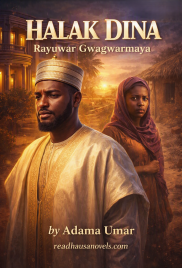
HALAK DINA
by Adama Umar
Opening Teaser
What happens when a man’s greatest desire becomes the very thing threatening to destroy his marriages, while somewhere far away, a young orphan is struggling to survive in a home where cruelty has replaced compassion?
Aliyu has wealth, influence, education, and more than one wife, yet none of these things can protect him from a private struggle that has followed him since adolescence. His unusual condition affects his relationships, his marriages, and eventually the women who are expected to live with him. As jealousy begins to grow between his wives, a question becomes impossible to ignore: how much can love endure when one person’s needs become another person’s burden?
At the same time, Shatu is fighting an entirely different battle. Poor, vulnerable, and treated harshly by the woman who should protect her, she dreams of escaping a life of hunger, accusations, humiliation, and constant punishment. When an unexpected marriage proposal appears to offer her a way out, she must decide whether she is choosing freedom or simply exchanging one difficult life for another.
Two lives. Two very different forms of suffering. And a story in which love, marriage, family, poverty, jealousy, faith, and human weakness are destined to collide.
Summary
Halak Dina introduces Aliyu, a wealthy young businessman whose comfortable life hides a deeply complicated personal struggle. Coming from a prosperous family involved in the gold business, Aliyu grows up surrounded by privilege and affection. His mother, Mommy, devotes herself to raising him and his younger sister after the sudden death of his father. As Aliyu grows older, however, he begins experiencing powerful physical desires that he does not fully understand. His attempts to find answers lead him to teachers, doctors, religious advice, and eventually to marriage.
Aliyu’s condition becomes one of the central conflicts of his adult life. Marriage does not immediately solve the problem. Instead, it introduces another layer of difficulty because the women in his life must cope with demands that are far beyond what they expected from married life. His wives have different personalities and different ways of responding to him, but jealousy gradually becomes unavoidable. The arrangement forces them to confront questions about affection, fairness, intimacy, and the meaning of marital responsibility. What begins as an attempt to find a solution slowly develops into a complicated emotional struggle between the people living under the same roof.
Aliyu’s story becomes even more complicated when his mother arranges another marriage for him. The decision is made because the family believes marriage may provide an answer to his continuing problem, but the new bride, Hafsat, is young and inexperienced. Instead of approaching marriage with maturity, she enters the household carrying the influence of her upbringing and her mother’s instructions. Money, secrecy, manipulation, and family interference soon become additional sources of tension. Aliyu finds himself dealing with a marriage that does not resemble the solution he imagined.
While Aliyu battles problems created by wealth, marriage, and an uncontrollable personal struggle, Shatu lives at the opposite end of society. She is an orphan who has been left vulnerable in the care of a harsh guardian. Hunger is part of her daily existence, and even ordinary responsibilities become difficult because she lacks the security and affection a child should receive. Lawandi, who repeatedly shows concern for her, becomes one of the few people who offers her kindness without demanding anything in return. Yet even that friendship attracts suspicion and accusations.
Shatu’s situation eventually reaches a point where Baffa, worried about her future and frightened by the treatment she receives at home, considers marriage as the only practical way to remove her from the environment. Alh Manu becomes a possible husband, but the decision is far from simple. Shatu has feelings, fears, memories, and unanswered questions of her own. Meanwhile, the discovery of a major development connected to the land where she lives threatens to bring another unexpected turn into her life. As Aliyu’s household becomes increasingly unstable and Shatu approaches a life-changing decision, their separate stories move toward a future neither of them could have anticipated.
Genre and Setting
Halak Dina is a mature Hausa romance and family drama built around marriage, interpersonal conflict, emotional tension, poverty, wealth, family expectations, and difficult personal circumstances. The story moves between the affluent environment of Maiduguri and the harsher realities of rural life around Biu. This contrast gives the novel two distinct worlds.
Aliyu’s world is filled with large homes, business interests, family wealth, modern conveniences, and social influence. Shatu’s world is defined by poverty, household labour, hunger, village life, and the struggle to obtain even basic security. By placing these environments alongside each other, the story explores how suffering can exist in completely different forms regardless of a person’s financial position.
Core Themes
Marriage and Responsibility
Marriage is at the heart of Halak Dina. The novel questions what happens when people enter marriage without completely understanding the responsibilities attached to it. Aliyu’s experiences demonstrate that wealth and physical attraction cannot automatically create a peaceful marriage. His wives are forced to confront the emotional consequences of sharing a husband whose needs are unusually demanding.
Jealousy and Rivalry
The presence of multiple wives creates an atmosphere where affection becomes something everyone watches closely. Differences in appearance, attention, emotional connection, and perceived favouritism create tension. The novel examines how jealousy can begin quietly before turning into open conflict.
Poverty and Survival
Shatu’s storyline provides a stark picture of deprivation. Her struggle is not simply about lacking money. It is about lacking protection, dignity, food, emotional security, and someone willing to stand firmly in her corner. Her circumstances make every decision about her future extremely important.
Family and Protection
The novel repeatedly asks what family responsibility really means. Mommy tries to protect Aliyu, while Baffa worries about the future of Shatu. At the same time, other relatives sometimes become sources of pressure rather than protection. The story therefore presents family as both a place of refuge and a possible source of conflict.
Faith and Guidance
Religion appears throughout Aliyu’s journey and Shatu’s life. Aliyu seeks guidance about his personal struggle, while Shatu turns to prayer and istikhara when faced with a major decision. These moments add another dimension to the characters’ choices as they attempt to understand what is happening in their lives.
Love Versus Circumstance
The novel repeatedly places love against circumstances that are difficult to control. Shatu must consider whether marriage can give her the peace she has been denied. Aliyu must discover whether affection alone can hold his complicated household together. The answers are not presented as simple ones.
Key Characters
Aliyu is a wealthy businessman whose seemingly privileged life conceals a personal struggle that has affected him since adolescence. His condition shapes his relationships and becomes the central challenge of his marriages. Although he has considerable wealth and social influence, he discovers that money cannot simply eliminate every problem.
Naima is one of Aliyu’s wives and appears deeply connected to him. Her relationship with him becomes particularly important because she believes she understands how to satisfy his needs better than the others. Her confidence, however, exists alongside the jealousy and competition created by the presence of the other wives.
Najla is another of Aliyu’s wives. She observes the situation around her and experiences the frustrations that come with sharing her husband. Her interactions with Naima reveal the complicated mixture of rivalry, exhaustion, humour, and cooperation that develops between the women.
Hafsat enters Aliyu’s life under circumstances that are intended to provide a solution to his struggle. Young and heavily influenced by her mother, she approaches marriage with a very different understanding from the people around her. Her behaviour soon creates new complications within the household.
Mommy is Aliyu’s mother and one of the strongest figures in his background. After losing her husband, she dedicates herself to raising her children. Her concern for Aliyu leads her to search for solutions to his condition, even when those solutions create difficult questions of their own.
Shatu represents the novel’s most vulnerable perspective. An orphan living under harsh conditions, she works, suffers hunger, and endures repeated humiliation while hoping for a better future. Her kindness toward Lawandi and her reliance on prayer reveal a character who remains emotionally resilient despite her circumstances.
Lawandi is one of the few people who consistently shows Shatu compassion. He helps her during difficult moments and appears to care deeply about her, although his feelings are complicated by the realities surrounding her.
Baffa becomes an important protector in Shatu’s life. He is troubled by the way she is treated and fears that leaving her in the same environment could expose her to even greater danger. His consideration of marriage for Shatu comes from a desire to find her a safer future.
Inna is Shatu’s harsh guardian. Her treatment of Shatu creates one of the novel’s most painful conflicts. Suspicion, anger, accusations, and constant demands shape their relationship, leaving Shatu desperate for a way out.
Analytics and Insight
At its core, Halak Dina is built around two contrasting forms of captivity. Aliyu is surrounded by wealth but struggles to control a powerful personal problem that repeatedly interferes with his relationships. Shatu has almost none of the material advantages Aliyu possesses, yet her greatest struggle is finding a path away from poverty and mistreatment.
The novel also uses marriage as a meeting point between personal desire and responsibility. Aliyu believes marriage can provide an answer to his problem, but every new relationship creates consequences for another person. His wives are not simply supporting characters in his struggle. They have their own emotions, needs, insecurities, and limits.
Shatu’s storyline provides the emotional counterweight to Aliyu’s world. Her suffering demonstrates that marriage can look like freedom to someone trapped in poverty, yet the novel leaves readers questioning whether any marriage should be viewed as an escape without considering what comes afterward.
Another important element is secrecy. Characters hide feelings, conceal intentions, misunderstand one another, and make decisions without revealing the complete truth. These secrets continually create new questions. The discovery of Aliyu’s past, the history of the women he married, Shatu’s family background, and the consequences of the land dispute all suggest that the characters have not yet reached the most important revelations.
What Makes the Story Intriguing
The novel does not rely on a single conflict. Several storylines move simultaneously. Aliyu’s struggle develops inside a wealthy household where jealousy is growing. Hafsat’s arrival introduces another unpredictable element. Shatu remains trapped in a completely different environment where hunger and cruelty threaten her future. Lawandi’s feelings add another emotional complication, while Baffa’s attempt to arrange Shatu’s marriage creates a decision that could permanently change her life.
The greatest suspense comes from the questions surrounding these characters. Can Aliyu’s marriages survive the pressure created by his condition? Will his wives continue tolerating the situation? What happened to the women he married before his current wives? Will Shatu accept Alh Manu, and if she does, will the marriage truly give her the peace she seeks? What lies behind Shatu’s family history? And what happens when the land connected to her village becomes involved in a major project?
Each answer threatens to create another question.
A Quote to Capture the Novel
Final Insight
Halak Dina is ultimately a story about people searching for relief in very different ways. Aliyu searches for an answer to a problem that has followed him for years. His wives search for security, affection, and recognition within a difficult marriage. Shatu searches for dignity and a life beyond constant suffering. Their journeys reveal how easily love can become tangled with responsibility, jealousy, family pressure, poverty, and personal weakness.
Behind the romance and family drama lies a deeper question about what people are willing to endure in the hope of finding a better life. For Aliyu, the answer may lie in understanding himself rather than simply adding another marriage. For Shatu, it may depend on whether the person who offers her a new life can truly protect the dignity she has been denied.
And as their stories continue, the choices already made may prove to be only the beginning.