What happens when a fifteen-year-old boy is forced to become the strength his broken family desperately needs?
After losing his father and then watching his grandmother die, Muhammad Jadda is left with his sick father and younger siblings in a world that seems determined to take away everything they have left. His mother has already walked away from them, leaving behind wounds that are far deeper than poverty. Just when their situation appears hopeless, Abba, a compassionate and wealthy neighbor, takes the orphaned children into his home and promises to become the father they no longer have.
But entering a comfortable home does not mean entering a peaceful life.
Inside Abba's house lives Asama'u, his wife, a woman who never expected to share her carefully imagined future with children who are not hers. Her resentment grows when Abba brings Muhammad Jadda and his younger brother into the family and begins treating them as his own. To her, they are an unwanted responsibility. To Abba, they are children who deserve protection.
Caught between a merciless stepmother, a protective guardian, painful memories, and a desperate desire for education, Muhammad Jadda begins to discover that poverty is not the only thing capable of destroying a person's future. Sometimes, the greatest battles are fought inside the walls of a home.
And this is only the beginning.
Summary
Muhammad Jadda's childhood has been shaped by loss, deprivation, and responsibilities far beyond his years. At only fifteen, he possesses the emotional weight of someone who has lived through decades of hardship. His father is seriously ill, his family has little money, and his mother has abandoned them. The final words and desperate pleas of his dying father continue to live inside his mind, especially the painful request that their mother remain with the children and care for them. Instead, she leaves, creating a wound in Jadda that refuses to heal. He begins to associate his mother's departure with every tragedy that has followed, and his feelings toward her gradually harden into something close to hatred.
The death of his grandmother makes their situation even worse. She had been one of the few remaining pillars in their lives, and with her gone, the children are left without the person who had helped them survive their difficult circumstances. Hunger, grief, loneliness, and uncertainty become part of their daily existence. Muhammad Jadda tries to hold himself together because he knows his younger siblings depend on him. He is still a child himself, yet his circumstances force him to think like an adult. His greatest remaining hope is education. To him, school is not simply a place to learn. It represents freedom, dignity, and the possibility of escaping the life that has trapped his family.
Their lives change when Abba decides to take responsibility for them. Having known their family for years, Abba has already demonstrated kindness toward their father and now refuses to watch the children struggle alone. He brings them into his home and promises to care for them as though they were his own. For the younger boys, the move brings excitement and the possibility of comfort. For Muhammad Jadda, however, it brings uncertainty. He understands that entering another person's household means entering another person's rules, and he immediately senses that not everyone in the house welcomes them.
His fears prove correct. Asama'u, Abba's wife, makes no effort to hide her resentment. She sees the children as an intrusion into the life she had imagined for herself and her husband. She resents the money spent on them, the attention they receive, and the responsibilities their presence brings into her household. Her treatment of them becomes increasingly harsh, particularly toward Muhammad Jadda, who refuses to surrender his dignity even when circumstances leave him with little choice. When she prevents them from going to school and humiliates them because they are orphans, she strikes at the one thing Jadda still believes can save him. Yet Abba refuses to abandon them. He makes it clear to Asama'u that loving his children is not negotiable and that any future he builds must include their wellbeing.
As the conflict inside the household begins to deepen, Muhammad Jadda finds himself facing a battle much larger than poverty. He must survive the bitterness of a woman who sees him as an unwanted burden while protecting his younger siblings from the same cruelty. At the same time, Abba must find a way to balance his responsibilities as a husband with the promise he has made to children who desperately need him. Asama'u, meanwhile, must decide whether she will continue fighting against the children or learn to live with the reality that they are now part of her husband's world. Beneath all of this lies a deeper mystery involving Jadda's mother, his father's death, and the painful conclusions the boy has drawn about why his family was abandoned. The more the characters struggle to understand one another, the more dangerous their misunderstandings become.
Genre
DUNIYATA is a character-driven Hausa family drama filled with emotional conflict, domestic tension, suspense, hardship, and complicated relationships. The story combines family drama with psychological tension and elements of romance, while placing particular emphasis on childhood trauma, marriage, responsibility, sacrifice, poverty, and the consequences of abandonment.
Rather than depending only on dramatic events, the novel builds much of its tension through the emotions of its characters. Anger, resentment, grief, jealousy, suspicion, compassion, and loyalty constantly collide, creating a household where even an ordinary conversation can become the beginning of another major conflict.
Setting
The story unfolds primarily within a Hausa Muslim family and community environment where family reputation, marriage, parental responsibility, education, religion, and social expectations play important roles.
The contrast between Muhammad Jadda's former home and Abba's household is especially significant. His old home represents poverty, sickness, grief, and abandonment. Abba's home represents comfort, wealth, opportunity, and security, but beneath its beautiful surroundings lies an emotional struggle that money cannot solve.
The school environment also carries symbolic importance. For Jadda, education represents a possible escape from poverty and a chance to build a future different from the one he inherited. When that opportunity is threatened, the conflict becomes much more personal.
Core Themes
Family Beyond Blood
One of the strongest ideas in DUNIYATA is that family is not always defined by blood. Abba chooses to take responsibility for children who are not biologically his. He does not merely provide them with shelter. He attempts to give them the protection, education, dignity, and affection that life has denied them.
The story consequently asks an important question: can genuine fatherhood exist without biological connection? Abba's actions suggest that it can, but the resistance he faces shows how complicated such a choice can become.
Abandonment and Its Consequences
Muhammad Jadda's greatest emotional wound is not simply poverty. It is abandonment. His mother's departure leaves him struggling to understand why the person who should have protected him chose to leave.
That unanswered question becomes part of his identity. His anger toward his mother influences how he sees women, family, and even his own future. The novel shows how an abandonment experienced during childhood can continue shaping a person's thoughts long after the original event has passed.
The Burden of Growing Up Too Soon
Jadda is still young, but his circumstances do not allow him to behave like an ordinary teenager. He worries about his sick father, his younger siblings, food, clothing, school, and their future.
His maturity becomes one of his defining characteristics, but it is also a tragedy. The story invites readers to consider what happens when children are forced to carry responsibilities that should belong to adults.
Education as Hope
For Jadda, education is more than academic achievement. It is his remaining dream. He is willing to endure hardship because he believes education can change his destiny.
When Asama'u threatens that dream, she does not merely prevent a child from attending school. She threatens the one future he has been desperately holding onto.
Marriage and Responsibility
Abba's marriage becomes another battlefield in the story. He loves and respects his wife, but he also refuses to sacrifice vulnerable children simply to preserve domestic peace.
The novel explores the difficult question of what happens when marital expectations conflict with moral responsibility.
Jealousy and Possessiveness
Asama'u's resentment is connected to more than the physical presence of the children. She fears losing the space, attention, resources, and future she believes belong to her own family.
Her jealousy gradually turns the children into symbols of everything she believes is being taken away from her.
Misunderstanding and Suspicion
Several characters interpret situations through their own pain rather than through complete understanding. Jadda interprets his mother's abandonment through the suffering he has experienced. Asama'u interprets the children's arrival as an attack on her future. Abba attempts to interpret everyone's behavior while struggling to see the full extent of what is happening inside his household.
These conflicting perceptions create much of the story's suspense.
Key Characters
Muhammad Jadda
Muhammad Jadda is the emotional center of the story. At fifteen, he is unusually mature, observant, stubborn, and deeply protective of his younger siblings. His intelligence allows him to understand situations that many adults around him fail to recognize.
He carries enormous emotional wounds, particularly concerning his mother's abandonment and his father's suffering. Despite everything, he remains determined to pursue education. His strength is admirable, but his unresolved anger threatens to shape his view of the world in dangerous ways.
Abba
Abba represents compassion, responsibility, and protective fatherhood. He is financially comfortable, but his greatest quality is not his wealth. It is his willingness to use what he has to help people who cannot help themselves.
He becomes determined to give Jadda and his siblings a home and a future. However, his decision creates tension in his marriage, forcing him to confront the consequences of trying to protect everyone he loves.
Asama'u
Asama'u is one of the most complicated figures in the story. She is not presented simply as a cruel woman. Her actions emerge from resentment, jealousy, frustration, and fear about the life she believes she is losing.
She does not want children who are not hers becoming the center of her household. Her resistance becomes increasingly severe, especially when she realizes that Abba's commitment to them is stronger than she expected.
Her character creates one of the novel's most important questions: can someone protect their own dreams without destroying another person's future?
Faruqee
Faruqee is one of the children already living in Abba's household. He immediately develops a connection with Muhammad Jadda and seems genuinely happy about having someone close to his age and intelligence around him.
Unlike some of the adults, Faruqee does not approach Jadda through suspicion. He sees a potential brother and friend. His warmth provides a sharp contrast to the hostility coming from Asama'u.
Saddiq and Musaddiq
The younger boys add another emotional dimension to the story. Their innocence allows them to experience the new household differently from Muhammad Jadda. They are more easily excited by friendship, comfort, clothing, food, and the prospect of a better life.
At the same time, their vulnerability makes Jadda even more protective because he understands that they cannot fully comprehend the danger and tension surrounding them.
Jadda's Mother
Although her physical presence is limited in the provided chapters, Jadda's mother casts a powerful shadow over the entire story. Her decision to leave her sick husband and children becomes one of the defining wounds in Jadda's life.
Whether his interpretation of her actions is completely accurate remains one of the questions hanging over the story.
Jadda's Father
Jadda's father is a dying, impoverished man whose final days become deeply significant to his son's emotional development. His desperate appeal to their mother to remain with the children reveals how vulnerable the family has become.
His death leaves Jadda with grief, unanswered questions, and an enormous responsibility.
Analytics and Insight
The strongest element of DUNIYATA is its emotional conflict. The story does not present poverty as the only enemy. Instead, it places vulnerable children inside a household where material comfort exists but emotional acceptance does not.
Muhammad Jadda is particularly compelling because his greatest strength is also his greatest vulnerability. He has learned to think beyond his age because life forced him to. He observes adults carefully, remembers their words, and connects their actions with consequences. Yet underneath that maturity is a wounded teenager who still wants the simple things other children take for granted: a mother who stays, a father who is healthy, enough food, a safe home, and the opportunity to attend school.
Abba creates an interesting moral contrast. He has enough resources to change the children's circumstances, but resources alone cannot guarantee their happiness. His greatest challenge is not buying clothes, paying school fees, or providing food. His real challenge is creating a home where everyone feels valued.
Asama'u, meanwhile, provides the story with its most volatile source of tension. Her resentment is not expressed quietly. She makes the children feel that they are unwanted, and every act of rejection deepens Jadda's existing wounds. The result is a dangerous emotional cycle. The more Asama'u rejects them, the more Jadda distrusts her. The more Jadda distrusts her, the more difficult it becomes for her to accept him.
The novel also creates suspense through unanswered questions. Why exactly did Jadda's mother leave? Was poverty truly the reason? What happened between his parents? Can Abba protect the children without destroying his marriage? Will Asama'u eventually accept them, or will her resentment become even more destructive? And most importantly, will Muhammad Jadda's pain eventually soften, or will it turn into something that permanently changes the way he sees the world?
These questions give DUNIYATA a strong narrative engine and make the story more than a simple tale of orphans finding a new home.
What Makes DUNIYATA Different?
DUNIYATA stands out because the central conflict is not built around a single villain or a single tragedy. Instead, several emotional wounds collide inside one household.
A sick father leaves behind children who are already struggling. A mother walks away and becomes the subject of her son's deepest resentment. A compassionate man opens his home to children who need him. His wife sees their arrival as a threat to everything she hoped her marriage would become. Meanwhile, the children themselves are forced to navigate a world where kindness and cruelty can exist under the same roof.
The story therefore keeps asking readers to look beyond appearances. A wealthy house may hide pain. A harsh woman may be acting from her own fears. A mature boy may still be carrying the heart of a wounded child. And a man who appears to have everything may discover that protecting the people he loves requires sacrifices money cannot solve.
A Deeper Look at Muhammad Jadda
Perhaps the most intriguing part of Jadda's character is the way his experiences have influenced his understanding of women and motherhood. His mother's abandonment has become so deeply embedded in his mind that he begins making conclusions about women from his own experience.
This is dangerous because his conclusion may not necessarily be the complete truth.
The novel leaves room for readers to question whether Jadda has understood everything correctly or whether grief has caused him to build an explanation that makes sense to a wounded child. His memories are real, his pain is real, but his interpretation may still be incomplete.
That uncertainty gives his character considerable depth.
Suspense and Emotional Pull
The tension inside Abba's home is only beginning. Asama'u has already made her position clear, while Abba has made an equally firm promise to the children. Neither side appears willing to surrender.
Jadda's education is also hanging in the balance. Every threat against his schooling feels like a threat against his future. Meanwhile, his younger siblings remain dependent on the adults around them, making every household conflict potentially more serious.
And somewhere beneath the anger surrounding Jadda's mother lies a truth that he may not yet know.
That truth could change everything.
Reader Takeaway
DUNIYATA is a story about children who lose almost everything but refuse to stop hoping. It is about a man who chooses responsibility when he could have looked away, a woman struggling with a reality she never wanted, and a young boy whose intelligence cannot completely protect him from the wounds inside his heart.
It explores the difference between providing for someone and truly accepting them. It examines what happens when marriage, motherhood, fatherhood, poverty, jealousy, and compassion collide. Above all, it asks whether broken people can find a place where they finally feel they belong.
Readers who enjoy emotionally intense Hausa family stories filled with domestic conflict, strong personalities, difficult relationships, suspense, and slow-burning revelations will find plenty to become invested in.
Quote
"A home can give a child a roof over his head, but only love can make him believe he finally has somewhere to belong."
Final Verdict
DUNIYATA begins with grief, poverty, abandonment, and a family on the edge of collapse, but its real journey is about what happens after someone opens the door and offers that broken family a second chance.
Muhammad Jadda has spent too long learning how to survive. Now he must learn how to live.
Abba has promised to become the father these children lost. Asama'u has already decided that they do not belong.
Between them stands a household filled with secrets, resentment, hope, and unresolved pain.
And the deeper the story goes, the more readers are likely to discover that the greatest battles in DUNIYATA are not fought outside the home.




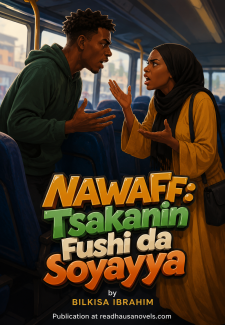




![<? $row['name']; ?>](https://readhausanovels.com/Public/thumb/225x325/ebook/2026/04/auto-76-rayuwa-da-gi-i-complete-hausa-novel-352955a393.webp)
![<? $row['name']; ?>](https://readhausanovels.com/Public/thumb/225x325/ebook/2026/04/auto-78-karuwan-cikin-gida-book-2-complete-hau-fb4ccbf490.webp)
![<? $row['name']; ?>](https://readhausanovels.com/Public/thumb/225x325/ebook/2026/04/auto-79-ar-goggo-complete-hausa-novel-bf34111897.webp)
![<? $row['name']; ?>](https://readhausanovels.com/Public/thumb/225x325/ebook/2026/04/auto-82-rayuwar-mace-complete-hausa-novel-c9b8534b3b.webp)
![<? $row['name']; ?>](https://readhausanovels.com/Public/thumb/225x325/ebook/2026/04/auto-83-rana-daya-book-1-complete-hausa-novel-9c9d9d0e65.webp)
![<? $row['name']; ?>](https://readhausanovels.com/Public/thumb/225x325/ebook/2026/04/auto-91-kida-a-ruwa-3-complete-hausa-novel-5acb79b03a.webp)
![<? $row['name']; ?>](https://readhausanovels.com/Public/thumb/225x325/ebook/2026/04/auto-93-rainon-soja-book-1-complete-hausa-nove-79a103512e.webp)
![<? $row['name']; ?>](https://readhausanovels.com/Public/thumb/225x325/ebook/2026/04/auto-95-abunda-ke-boye-complete-hausa-novel-3283cf6583.webp)
![<? $row['name']; ?>](https://readhausanovels.com/Public/thumb/225x325/ebook/2026/04/auto-96-ranar-naka-complt-complete-hausa-novel-873583e9cc.webp)
![<? $row['name']; ?>](https://readhausanovels.com/Public/thumb/225x325/ebook/2026/04/auto-97-cutarwa-complt-complete-hausa-novel-106ea9219f.webp)
![<? $row['name']; ?>](https://readhausanovels.com/Public/thumb/225x325/ebook/2026/04/auto-98-babu-so-complete-hausa-novel-2aef9616a9.webp)
![<? $row['name']; ?>](https://readhausanovels.com/Public/thumb/225x325/ebook/2026/04/auto-99-rayuwa-da-gi-i-complete-hausa-novel-becf01d29d.webp)
DUNIYATA by Huguma
Hook
What happens when a fifteen-year-old boy is forced to become the strength his broken family desperately needs?
After losing his father and then watching his grandmother die, Muhammad Jadda is left with his sick father and younger siblings in a world that seems determined to take away everything they have left. His mother has already walked away from them, leaving behind wounds that are far deeper than poverty. Just when their situation appears hopeless, Abba, a compassionate and wealthy neighbor, takes the orphaned children into his home and promises to become the father they no longer have.
But entering a comfortable home does not mean entering a peaceful life.
Inside Abba's house lives Asama'u, his wife, a woman who never expected to share her carefully imagined future with children who are not hers. Her resentment grows when Abba brings Muhammad Jadda and his younger brother into the family and begins treating them as his own. To her, they are an unwanted responsibility. To Abba, they are children who deserve protection.
Caught between a merciless stepmother, a protective guardian, painful memories, and a desperate desire for education, Muhammad Jadda begins to discover that poverty is not the only thing capable of destroying a person's future. Sometimes, the greatest battles are fought inside the walls of a home.
And this is only the beginning.
Summary
Muhammad Jadda's childhood has been shaped by loss, deprivation, and responsibilities far beyond his years. At only fifteen, he possesses the emotional weight of someone who has lived through decades of hardship. His father is seriously ill, his family has little money, and his mother has abandoned them. The final words and desperate pleas of his dying father continue to live inside his mind, especially the painful request that their mother remain with the children and care for them. Instead, she leaves, creating a wound in Jadda that refuses to heal. He begins to associate his mother's departure with every tragedy that has followed, and his feelings toward her gradually harden into something close to hatred.
The death of his grandmother makes their situation even worse. She had been one of the few remaining pillars in their lives, and with her gone, the children are left without the person who had helped them survive their difficult circumstances. Hunger, grief, loneliness, and uncertainty become part of their daily existence. Muhammad Jadda tries to hold himself together because he knows his younger siblings depend on him. He is still a child himself, yet his circumstances force him to think like an adult. His greatest remaining hope is education. To him, school is not simply a place to learn. It represents freedom, dignity, and the possibility of escaping the life that has trapped his family.
Their lives change when Abba decides to take responsibility for them. Having known their family for years, Abba has already demonstrated kindness toward their father and now refuses to watch the children struggle alone. He brings them into his home and promises to care for them as though they were his own. For the younger boys, the move brings excitement and the possibility of comfort. For Muhammad Jadda, however, it brings uncertainty. He understands that entering another person's household means entering another person's rules, and he immediately senses that not everyone in the house welcomes them.
His fears prove correct. Asama'u, Abba's wife, makes no effort to hide her resentment. She sees the children as an intrusion into the life she had imagined for herself and her husband. She resents the money spent on them, the attention they receive, and the responsibilities their presence brings into her household. Her treatment of them becomes increasingly harsh, particularly toward Muhammad Jadda, who refuses to surrender his dignity even when circumstances leave him with little choice. When she prevents them from going to school and humiliates them because they are orphans, she strikes at the one thing Jadda still believes can save him. Yet Abba refuses to abandon them. He makes it clear to Asama'u that loving his children is not negotiable and that any future he builds must include their wellbeing.
As the conflict inside the household begins to deepen, Muhammad Jadda finds himself facing a battle much larger than poverty. He must survive the bitterness of a woman who sees him as an unwanted burden while protecting his younger siblings from the same cruelty. At the same time, Abba must find a way to balance his responsibilities as a husband with the promise he has made to children who desperately need him. Asama'u, meanwhile, must decide whether she will continue fighting against the children or learn to live with the reality that they are now part of her husband's world. Beneath all of this lies a deeper mystery involving Jadda's mother, his father's death, and the painful conclusions the boy has drawn about why his family was abandoned. The more the characters struggle to understand one another, the more dangerous their misunderstandings become.
Genre
DUNIYATA is a character-driven Hausa family drama filled with emotional conflict, domestic tension, suspense, hardship, and complicated relationships. The story combines family drama with psychological tension and elements of romance, while placing particular emphasis on childhood trauma, marriage, responsibility, sacrifice, poverty, and the consequences of abandonment.
Rather than depending only on dramatic events, the novel builds much of its tension through the emotions of its characters. Anger, resentment, grief, jealousy, suspicion, compassion, and loyalty constantly collide, creating a household where even an ordinary conversation can become the beginning of another major conflict.
Setting
The story unfolds primarily within a Hausa Muslim family and community environment where family reputation, marriage, parental responsibility, education, religion, and social expectations play important roles.
The contrast between Muhammad Jadda's former home and Abba's household is especially significant. His old home represents poverty, sickness, grief, and abandonment. Abba's home represents comfort, wealth, opportunity, and security, but beneath its beautiful surroundings lies an emotional struggle that money cannot solve.
The school environment also carries symbolic importance. For Jadda, education represents a possible escape from poverty and a chance to build a future different from the one he inherited. When that opportunity is threatened, the conflict becomes much more personal.
Core Themes
Family Beyond Blood
One of the strongest ideas in DUNIYATA is that family is not always defined by blood. Abba chooses to take responsibility for children who are not biologically his. He does not merely provide them with shelter. He attempts to give them the protection, education, dignity, and affection that life has denied them.
The story consequently asks an important question: can genuine fatherhood exist without biological connection? Abba's actions suggest that it can, but the resistance he faces shows how complicated such a choice can become.
Abandonment and Its Consequences
Muhammad Jadda's greatest emotional wound is not simply poverty. It is abandonment. His mother's departure leaves him struggling to understand why the person who should have protected him chose to leave.
That unanswered question becomes part of his identity. His anger toward his mother influences how he sees women, family, and even his own future. The novel shows how an abandonment experienced during childhood can continue shaping a person's thoughts long after the original event has passed.
The Burden of Growing Up Too Soon
Jadda is still young, but his circumstances do not allow him to behave like an ordinary teenager. He worries about his sick father, his younger siblings, food, clothing, school, and their future.
His maturity becomes one of his defining characteristics, but it is also a tragedy. The story invites readers to consider what happens when children are forced to carry responsibilities that should belong to adults.
Education as Hope
For Jadda, education is more than academic achievement. It is his remaining dream. He is willing to endure hardship because he believes education can change his destiny.
When Asama'u threatens that dream, she does not merely prevent a child from attending school. She threatens the one future he has been desperately holding onto.
Marriage and Responsibility
Abba's marriage becomes another battlefield in the story. He loves and respects his wife, but he also refuses to sacrifice vulnerable children simply to preserve domestic peace.
The novel explores the difficult question of what happens when marital expectations conflict with moral responsibility.
Jealousy and Possessiveness
Asama'u's resentment is connected to more than the physical presence of the children. She fears losing the space, attention, resources, and future she believes belong to her own family.
Her jealousy gradually turns the children into symbols of everything she believes is being taken away from her.
Misunderstanding and Suspicion
Several characters interpret situations through their own pain rather than through complete understanding. Jadda interprets his mother's abandonment through the suffering he has experienced. Asama'u interprets the children's arrival as an attack on her future. Abba attempts to interpret everyone's behavior while struggling to see the full extent of what is happening inside his household.
These conflicting perceptions create much of the story's suspense.
Key Characters
Muhammad Jadda
Muhammad Jadda is the emotional center of the story. At fifteen, he is unusually mature, observant, stubborn, and deeply protective of his younger siblings. His intelligence allows him to understand situations that many adults around him fail to recognize.
He carries enormous emotional wounds, particularly concerning his mother's abandonment and his father's suffering. Despite everything, he remains determined to pursue education. His strength is admirable, but his unresolved anger threatens to shape his view of the world in dangerous ways.
Abba
Abba represents compassion, responsibility, and protective fatherhood. He is financially comfortable, but his greatest quality is not his wealth. It is his willingness to use what he has to help people who cannot help themselves.
He becomes determined to give Jadda and his siblings a home and a future. However, his decision creates tension in his marriage, forcing him to confront the consequences of trying to protect everyone he loves.
Asama'u
Asama'u is one of the most complicated figures in the story. She is not presented simply as a cruel woman. Her actions emerge from resentment, jealousy, frustration, and fear about the life she believes she is losing.
She does not want children who are not hers becoming the center of her household. Her resistance becomes increasingly severe, especially when she realizes that Abba's commitment to them is stronger than she expected.
Her character creates one of the novel's most important questions: can someone protect their own dreams without destroying another person's future?
Faruqee
Faruqee is one of the children already living in Abba's household. He immediately develops a connection with Muhammad Jadda and seems genuinely happy about having someone close to his age and intelligence around him.
Unlike some of the adults, Faruqee does not approach Jadda through suspicion. He sees a potential brother and friend. His warmth provides a sharp contrast to the hostility coming from Asama'u.
Saddiq and Musaddiq
The younger boys add another emotional dimension to the story. Their innocence allows them to experience the new household differently from Muhammad Jadda. They are more easily excited by friendship, comfort, clothing, food, and the prospect of a better life.
At the same time, their vulnerability makes Jadda even more protective because he understands that they cannot fully comprehend the danger and tension surrounding them.
Jadda's Mother
Although her physical presence is limited in the provided chapters, Jadda's mother casts a powerful shadow over the entire story. Her decision to leave her sick husband and children becomes one of the defining wounds in Jadda's life.
Whether his interpretation of her actions is completely accurate remains one of the questions hanging over the story.
Jadda's Father
Jadda's father is a dying, impoverished man whose final days become deeply significant to his son's emotional development. His desperate appeal to their mother to remain with the children reveals how vulnerable the family has become.
His death leaves Jadda with grief, unanswered questions, and an enormous responsibility.
Analytics and Insight
The strongest element of DUNIYATA is its emotional conflict. The story does not present poverty as the only enemy. Instead, it places vulnerable children inside a household where material comfort exists but emotional acceptance does not.
Muhammad Jadda is particularly compelling because his greatest strength is also his greatest vulnerability. He has learned to think beyond his age because life forced him to. He observes adults carefully, remembers their words, and connects their actions with consequences. Yet underneath that maturity is a wounded teenager who still wants the simple things other children take for granted: a mother who stays, a father who is healthy, enough food, a safe home, and the opportunity to attend school.
Abba creates an interesting moral contrast. He has enough resources to change the children's circumstances, but resources alone cannot guarantee their happiness. His greatest challenge is not buying clothes, paying school fees, or providing food. His real challenge is creating a home where everyone feels valued.
Asama'u, meanwhile, provides the story with its most volatile source of tension. Her resentment is not expressed quietly. She makes the children feel that they are unwanted, and every act of rejection deepens Jadda's existing wounds. The result is a dangerous emotional cycle. The more Asama'u rejects them, the more Jadda distrusts her. The more Jadda distrusts her, the more difficult it becomes for her to accept him.
The novel also creates suspense through unanswered questions. Why exactly did Jadda's mother leave? Was poverty truly the reason? What happened between his parents? Can Abba protect the children without destroying his marriage? Will Asama'u eventually accept them, or will her resentment become even more destructive? And most importantly, will Muhammad Jadda's pain eventually soften, or will it turn into something that permanently changes the way he sees the world?
These questions give DUNIYATA a strong narrative engine and make the story more than a simple tale of orphans finding a new home.
What Makes DUNIYATA Different?
DUNIYATA stands out because the central conflict is not built around a single villain or a single tragedy. Instead, several emotional wounds collide inside one household.
A sick father leaves behind children who are already struggling. A mother walks away and becomes the subject of her son's deepest resentment. A compassionate man opens his home to children who need him. His wife sees their arrival as a threat to everything she hoped her marriage would become. Meanwhile, the children themselves are forced to navigate a world where kindness and cruelty can exist under the same roof.
The story therefore keeps asking readers to look beyond appearances. A wealthy house may hide pain. A harsh woman may be acting from her own fears. A mature boy may still be carrying the heart of a wounded child. And a man who appears to have everything may discover that protecting the people he loves requires sacrifices money cannot solve.
A Deeper Look at Muhammad Jadda
Perhaps the most intriguing part of Jadda's character is the way his experiences have influenced his understanding of women and motherhood. His mother's abandonment has become so deeply embedded in his mind that he begins making conclusions about women from his own experience.
This is dangerous because his conclusion may not necessarily be the complete truth.
The novel leaves room for readers to question whether Jadda has understood everything correctly or whether grief has caused him to build an explanation that makes sense to a wounded child. His memories are real, his pain is real, but his interpretation may still be incomplete.
That uncertainty gives his character considerable depth.
Suspense and Emotional Pull
The tension inside Abba's home is only beginning. Asama'u has already made her position clear, while Abba has made an equally firm promise to the children. Neither side appears willing to surrender.
Jadda's education is also hanging in the balance. Every threat against his schooling feels like a threat against his future. Meanwhile, his younger siblings remain dependent on the adults around them, making every household conflict potentially more serious.
And somewhere beneath the anger surrounding Jadda's mother lies a truth that he may not yet know.
That truth could change everything.
Reader Takeaway
DUNIYATA is a story about children who lose almost everything but refuse to stop hoping. It is about a man who chooses responsibility when he could have looked away, a woman struggling with a reality she never wanted, and a young boy whose intelligence cannot completely protect him from the wounds inside his heart.
It explores the difference between providing for someone and truly accepting them. It examines what happens when marriage, motherhood, fatherhood, poverty, jealousy, and compassion collide. Above all, it asks whether broken people can find a place where they finally feel they belong.
Readers who enjoy emotionally intense Hausa family stories filled with domestic conflict, strong personalities, difficult relationships, suspense, and slow-burning revelations will find plenty to become invested in.
Quote
Final Verdict
DUNIYATA begins with grief, poverty, abandonment, and a family on the edge of collapse, but its real journey is about what happens after someone opens the door and offers that broken family a second chance.
Muhammad Jadda has spent too long learning how to survive. Now he must learn how to live.
Abba has promised to become the father these children lost. Asama'u has already decided that they do not belong.
Between them stands a household filled with secrets, resentment, hope, and unresolved pain.
And the deeper the story goes, the more readers are likely to discover that the greatest battles in DUNIYATA are not fought outside the home.
They are fought inside the heart.