What happens when a home that should offer peace becomes a battlefield of anger, poverty, rivalry, wounded pride, and buried resentment?
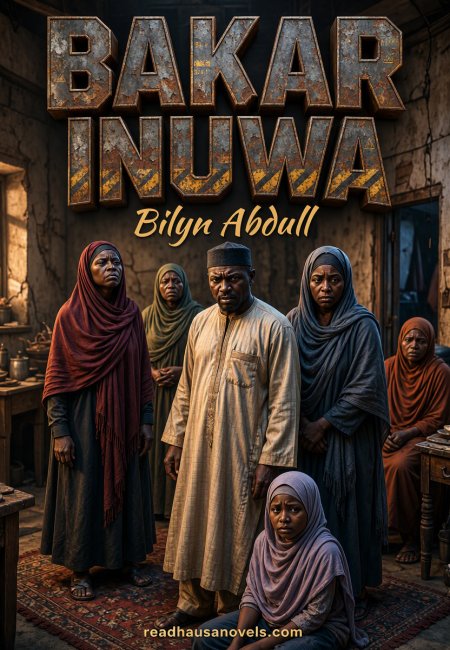
In BAƘAR INUWA, one man's household becomes a stage where every member carries a different kind of pain. Malam Dauda returns home consumed by frustration, only to find himself surrounded by wives and children who are no longer willing to quietly endure his temper. What begins with a simple demand for something to break the fast quickly exposes something much deeper: a family that has been struggling beneath the surface for years.
Behind the laughter, arguments, insults, and seemingly ordinary domestic quarrels lies a question that refuses to disappear. How long can a family survive when love, respect, responsibility, and patience have all been pushed to their limits?
Summary
BAƘAR INUWA opens inside a household where tension has become almost as familiar as daily routine. Malam Dauda is angry, frustrated, and clearly carrying burdens that extend beyond what happens inside his home. His arrival immediately creates an atmosphere of fear and irritation. Instead of finding the calm he expects, he encounters women who are increasingly unwilling to accept his harsh behavior without answering back. His anger quickly turns an ordinary evening into a confrontation that exposes the unstable relationship between him and his family.
At the center of the early conflict is the household's complicated domestic structure. Dauda has several wives, and years of living together have created rivalries, alliances, resentment, and different attitudes toward the man they all share. Baba Nafi approaches situations with greater calm, while Larai is more outspoken and unwilling to swallow every insult. Asabe is particularly bold, refusing to remain silent when she believes Dauda has crossed a line. Their exchanges are sometimes humorous, but beneath the comedy is a serious picture of women who have endured years of hardship and frustration.
The situation becomes more painful when a young girl takes responsibility for obtaining drinks and snacks so that the family can break their fast. Her intention is innocent, but Dauda interprets her actions as another offense. His anger escalates until she becomes the target of his frustration. The incident reveals how easily the weakest person in a troubled household can become the victim of problems they did not create. Her tears and attempts to remain respectful contrast sharply with the bitterness surrounding her.
As the story moves forward, the household begins to look less like a simple family caught in everyday disagreements and more like a place carrying years of unresolved problems. There are questions about money, responsibility, marriage, parenting, jealousy, dignity, and the consequences of allowing resentment to grow unchecked. The women are not simply background characters. Each has her own personality, perspective, and way of surviving the pressures of the home. Their interactions create both comic relief and emotional tension, making it difficult to determine when the next argument will become something much more serious.
The arrival of the second episode begins to widen the world beyond Dauda's immediate household, introducing the fictional setting of Dallo State and Hutawa L.G.A. This suggests that the problems surrounding BAƘAR INUWA will not remain confined to one room or one family. As the story develops, readers are invited to discover how the characters' choices, secrets, relationships, and personal struggles connect. The real intrigue is not simply whether the family will quarrel again, but what lies underneath all that anger and whether the people involved can escape the consequences of the lives they have created.
Genre
BAƘAR INUWA is primarily a Hausa family drama and domestic fiction, with strong elements of comedy, social commentary, emotional conflict, and suspense. The story uses humor and exaggerated household interactions to make difficult subjects accessible while still exploring serious questions about family responsibilities, marriage, poverty, parenting, and human behavior.
Its strength comes from the combination of comedy and tension. A scene may make the reader laugh one moment and then expose an uncomfortable reality the next.
Setting
The story is centered largely around a troubled family home where several wives and their children live under the authority of Malam Dauda. The house becomes more than a physical location. It functions as the primary arena where personalities collide, secrets emerge, frustrations are expressed, and family relationships are tested.
The narrative also introduces Dallo State and Hutawa L.G.A., establishing a broader fictional environment for the events of the novel. The author's disclaimer makes it clear that the locations and events are fictional and should not be interpreted as direct representations of real people or places.
Core Themes
Family Conflict and Responsibility: The novel examines what happens when family members fail to communicate and responsibilities are neglected. Dauda's behavior creates consequences that affect everyone around him.
Polygamous Family Dynamics: Multiple wives sharing one household naturally creates complicated relationships. The story explores jealousy, competition, cooperation, resentment, and the different ways women respond to the same husband.
Poverty and Frustration: Financial hardship is not treated merely as a background detail. It contributes directly to the anger and instability within the household.
Domestic Abuse and Its Consequences: The early episodes portray the frightening consequences of uncontrolled anger. The treatment of the young girl in particular demonstrates how innocent family members can suffer because of conflicts created by adults.
Patience, Dignity, and Self-Respect: Several characters struggle with the boundary between enduring hardship and defending their dignity.
Humor in Difficult Circumstances: Even when the household is deeply troubled, the characters' personalities and arguments create moments of comedy. This gives the story an entertaining surface while allowing heavier themes to remain underneath.
Human Imperfection: The novel repeatedly challenges the idea that fictional characters must represent their authors or readers. Its broader message is that people can recognize pieces of their own world in fiction without assuming the story is a direct account of someone's life.
Key Characters
Malam Dauda is one of the central figures and the source of much of the household's tension. He is quick-tempered, frustrated, proud, and increasingly overwhelmed by the circumstances surrounding him. His behavior makes him difficult to sympathize with at times, but his visible financial and emotional frustrations suggest that there is more beneath his anger than simple cruelty.
Asabe is outspoken, fearless, and unwilling to quietly accept humiliation. She possesses a sharp tongue and a strong sense of self-respect. Her confrontations with Dauda provide some of the story's funniest moments, but her character also reveals the anger that develops when someone has spent years feeling mistreated.
Larai is another strong personality within the household. She responds to Dauda's behavior with sarcasm and resistance rather than silence. Her exchanges with the other women demonstrate how rivalry and frustration can coexist with humor.
Baba Nafi appears more composed and restrained than some of the other women. She attempts to approach conflict with calmness, even when the household around her is becoming increasingly chaotic.
The Young Daughter represents one of the more vulnerable figures introduced in the opening episode. Her attempt to help the family becomes the reason she is punished, despite her good intentions. Through her, the novel highlights the emotional cost that family conflict can impose on innocent children.
Analytics and Insight
The strongest feature of BAƘAR INUWA is its ability to turn an ordinary domestic situation into a much larger examination of family life. The opening does not depend on an elaborate mystery to create interest. Instead, suspense grows from the characters themselves. Readers quickly learn that this family has history, and that history creates the expectation that today's argument is probably connected to yesterday's wounds.
The title, BAƘAR INUWA, meaning "Black Shadow," works effectively as a thematic image. A shadow follows people without necessarily being visible at first. In the same way, the household's unresolved problems appear to follow its members wherever they go. Anger, resentment, poverty, rivalry, and emotional wounds become the shadow hanging over the family.
The novel also uses contrast effectively. There is humor alongside pain, religious devotion alongside misconduct, family togetherness alongside emotional separation, and outward respect alongside private resentment. These contradictions make the characters feel more human because their lives are not presented as completely good or completely bad.
Most importantly, the story encourages readers to look beyond appearances. A loud argument may be the result of years of frustration. A harsh character may be carrying an unseen burden. A seemingly innocent decision may trigger a much larger conflict. That uncertainty gives the narrative room to grow into something more than a collection of family quarrels.
Why Readers May Connect With It
Readers who enjoy Hausa novels centered on family drama, complicated marriages, strong female characters, domestic tension, humor, and social lessons are likely to find BAƘAR INUWA particularly engaging. Its characters are imperfect, outspoken, emotional, and sometimes frustrating, which creates plenty of opportunities for readers to form strong opinions about them.
The story also leaves room for readers to ask difficult questions. Is patience always the right response to mistreatment? When does discipline become cruelty? Can a family remain united when resentment has been allowed to grow for years? And when everyone believes they are defending themselves, who becomes responsible for repairing the damage?
A Thought-Provoking Quote
“Sometimes the darkest shadow in a home is not the absence of light, but the pain that everyone has learned to hide.”
Final Insight
BAƘAR INUWA is not simply a story about a quarrelsome husband and his wives. Beneath its humor and dramatic exchanges is a portrait of a household struggling with the consequences of accumulated anger, financial pressure, rivalry, poor communication, and wounded dignity. The opening episodes establish a family where almost every conversation carries a history behind it, making even the smallest incident capable of becoming a major confrontation.
And that is where the suspense begins. The reader knows the household is already unstable, but the real question is how far the instability will go before something finally breaks.










![<? $row['name']; ?>](https://readhausanovels.com/Public/thumb/225x325/ebook/2026/04/auto-76-rayuwa-da-gi-i-complete-hausa-novel-352955a393.webp)
![<? $row['name']; ?>](https://readhausanovels.com/Public/thumb/225x325/ebook/2026/04/auto-78-karuwan-cikin-gida-book-2-complete-hau-fb4ccbf490.webp)
![<? $row['name']; ?>](https://readhausanovels.com/Public/thumb/225x325/ebook/2026/04/auto-79-ar-goggo-complete-hausa-novel-bf34111897.webp)
![<? $row['name']; ?>](https://readhausanovels.com/Public/thumb/225x325/ebook/2026/04/auto-82-rayuwar-mace-complete-hausa-novel-c9b8534b3b.webp)
![<? $row['name']; ?>](https://readhausanovels.com/Public/thumb/225x325/ebook/2026/04/auto-83-rana-daya-book-1-complete-hausa-novel-9c9d9d0e65.webp)
![<? $row['name']; ?>](https://readhausanovels.com/Public/thumb/225x325/ebook/2026/04/auto-91-kida-a-ruwa-3-complete-hausa-novel-5acb79b03a.webp)
![<? $row['name']; ?>](https://readhausanovels.com/Public/thumb/225x325/ebook/2026/04/auto-93-rainon-soja-book-1-complete-hausa-nove-79a103512e.webp)
![<? $row['name']; ?>](https://readhausanovels.com/Public/thumb/225x325/ebook/2026/04/auto-95-abunda-ke-boye-complete-hausa-novel-3283cf6583.webp)
![<? $row['name']; ?>](https://readhausanovels.com/Public/thumb/225x325/ebook/2026/04/auto-96-ranar-naka-complt-complete-hausa-novel-873583e9cc.webp)
![<? $row['name']; ?>](https://readhausanovels.com/Public/thumb/225x325/ebook/2026/04/auto-97-cutarwa-complt-complete-hausa-novel-106ea9219f.webp)
![<? $row['name']; ?>](https://readhausanovels.com/Public/thumb/225x325/ebook/2026/04/auto-98-babu-so-complete-hausa-novel-2aef9616a9.webp)
![<? $row['name']; ?>](https://readhausanovels.com/Public/thumb/225x325/ebook/2026/04/auto-99-rayuwa-da-gi-i-complete-hausa-novel-becf01d29d.webp)
BAƘAR INUWA
by Bilyn Abdull
Opening Teaser
What happens when a home that should offer peace becomes a battlefield of anger, poverty, rivalry, wounded pride, and buried resentment?
In BAƘAR INUWA, one man's household becomes a stage where every member carries a different kind of pain. Malam Dauda returns home consumed by frustration, only to find himself surrounded by wives and children who are no longer willing to quietly endure his temper. What begins with a simple demand for something to break the fast quickly exposes something much deeper: a family that has been struggling beneath the surface for years.
Behind the laughter, arguments, insults, and seemingly ordinary domestic quarrels lies a question that refuses to disappear. How long can a family survive when love, respect, responsibility, and patience have all been pushed to their limits?
Summary
BAƘAR INUWA opens inside a household where tension has become almost as familiar as daily routine. Malam Dauda is angry, frustrated, and clearly carrying burdens that extend beyond what happens inside his home. His arrival immediately creates an atmosphere of fear and irritation. Instead of finding the calm he expects, he encounters women who are increasingly unwilling to accept his harsh behavior without answering back. His anger quickly turns an ordinary evening into a confrontation that exposes the unstable relationship between him and his family.
At the center of the early conflict is the household's complicated domestic structure. Dauda has several wives, and years of living together have created rivalries, alliances, resentment, and different attitudes toward the man they all share. Baba Nafi approaches situations with greater calm, while Larai is more outspoken and unwilling to swallow every insult. Asabe is particularly bold, refusing to remain silent when she believes Dauda has crossed a line. Their exchanges are sometimes humorous, but beneath the comedy is a serious picture of women who have endured years of hardship and frustration.
The situation becomes more painful when a young girl takes responsibility for obtaining drinks and snacks so that the family can break their fast. Her intention is innocent, but Dauda interprets her actions as another offense. His anger escalates until she becomes the target of his frustration. The incident reveals how easily the weakest person in a troubled household can become the victim of problems they did not create. Her tears and attempts to remain respectful contrast sharply with the bitterness surrounding her.
As the story moves forward, the household begins to look less like a simple family caught in everyday disagreements and more like a place carrying years of unresolved problems. There are questions about money, responsibility, marriage, parenting, jealousy, dignity, and the consequences of allowing resentment to grow unchecked. The women are not simply background characters. Each has her own personality, perspective, and way of surviving the pressures of the home. Their interactions create both comic relief and emotional tension, making it difficult to determine when the next argument will become something much more serious.
The arrival of the second episode begins to widen the world beyond Dauda's immediate household, introducing the fictional setting of Dallo State and Hutawa L.G.A. This suggests that the problems surrounding BAƘAR INUWA will not remain confined to one room or one family. As the story develops, readers are invited to discover how the characters' choices, secrets, relationships, and personal struggles connect. The real intrigue is not simply whether the family will quarrel again, but what lies underneath all that anger and whether the people involved can escape the consequences of the lives they have created.
Genre
BAƘAR INUWA is primarily a Hausa family drama and domestic fiction, with strong elements of comedy, social commentary, emotional conflict, and suspense. The story uses humor and exaggerated household interactions to make difficult subjects accessible while still exploring serious questions about family responsibilities, marriage, poverty, parenting, and human behavior.
Its strength comes from the combination of comedy and tension. A scene may make the reader laugh one moment and then expose an uncomfortable reality the next.
Setting
The story is centered largely around a troubled family home where several wives and their children live under the authority of Malam Dauda. The house becomes more than a physical location. It functions as the primary arena where personalities collide, secrets emerge, frustrations are expressed, and family relationships are tested.
The narrative also introduces Dallo State and Hutawa L.G.A., establishing a broader fictional environment for the events of the novel. The author's disclaimer makes it clear that the locations and events are fictional and should not be interpreted as direct representations of real people or places.
Core Themes
Family Conflict and Responsibility: The novel examines what happens when family members fail to communicate and responsibilities are neglected. Dauda's behavior creates consequences that affect everyone around him.
Polygamous Family Dynamics: Multiple wives sharing one household naturally creates complicated relationships. The story explores jealousy, competition, cooperation, resentment, and the different ways women respond to the same husband.
Poverty and Frustration: Financial hardship is not treated merely as a background detail. It contributes directly to the anger and instability within the household.
Domestic Abuse and Its Consequences: The early episodes portray the frightening consequences of uncontrolled anger. The treatment of the young girl in particular demonstrates how innocent family members can suffer because of conflicts created by adults.
Patience, Dignity, and Self-Respect: Several characters struggle with the boundary between enduring hardship and defending their dignity.
Humor in Difficult Circumstances: Even when the household is deeply troubled, the characters' personalities and arguments create moments of comedy. This gives the story an entertaining surface while allowing heavier themes to remain underneath.
Human Imperfection: The novel repeatedly challenges the idea that fictional characters must represent their authors or readers. Its broader message is that people can recognize pieces of their own world in fiction without assuming the story is a direct account of someone's life.
Key Characters
Malam Dauda is one of the central figures and the source of much of the household's tension. He is quick-tempered, frustrated, proud, and increasingly overwhelmed by the circumstances surrounding him. His behavior makes him difficult to sympathize with at times, but his visible financial and emotional frustrations suggest that there is more beneath his anger than simple cruelty.
Asabe is outspoken, fearless, and unwilling to quietly accept humiliation. She possesses a sharp tongue and a strong sense of self-respect. Her confrontations with Dauda provide some of the story's funniest moments, but her character also reveals the anger that develops when someone has spent years feeling mistreated.
Larai is another strong personality within the household. She responds to Dauda's behavior with sarcasm and resistance rather than silence. Her exchanges with the other women demonstrate how rivalry and frustration can coexist with humor.
Baba Nafi appears more composed and restrained than some of the other women. She attempts to approach conflict with calmness, even when the household around her is becoming increasingly chaotic.
The Young Daughter represents one of the more vulnerable figures introduced in the opening episode. Her attempt to help the family becomes the reason she is punished, despite her good intentions. Through her, the novel highlights the emotional cost that family conflict can impose on innocent children.
Analytics and Insight
The strongest feature of BAƘAR INUWA is its ability to turn an ordinary domestic situation into a much larger examination of family life. The opening does not depend on an elaborate mystery to create interest. Instead, suspense grows from the characters themselves. Readers quickly learn that this family has history, and that history creates the expectation that today's argument is probably connected to yesterday's wounds.
The title, BAƘAR INUWA, meaning "Black Shadow," works effectively as a thematic image. A shadow follows people without necessarily being visible at first. In the same way, the household's unresolved problems appear to follow its members wherever they go. Anger, resentment, poverty, rivalry, and emotional wounds become the shadow hanging over the family.
The novel also uses contrast effectively. There is humor alongside pain, religious devotion alongside misconduct, family togetherness alongside emotional separation, and outward respect alongside private resentment. These contradictions make the characters feel more human because their lives are not presented as completely good or completely bad.
Most importantly, the story encourages readers to look beyond appearances. A loud argument may be the result of years of frustration. A harsh character may be carrying an unseen burden. A seemingly innocent decision may trigger a much larger conflict. That uncertainty gives the narrative room to grow into something more than a collection of family quarrels.
Why Readers May Connect With It
Readers who enjoy Hausa novels centered on family drama, complicated marriages, strong female characters, domestic tension, humor, and social lessons are likely to find BAƘAR INUWA particularly engaging. Its characters are imperfect, outspoken, emotional, and sometimes frustrating, which creates plenty of opportunities for readers to form strong opinions about them.
The story also leaves room for readers to ask difficult questions. Is patience always the right response to mistreatment? When does discipline become cruelty? Can a family remain united when resentment has been allowed to grow for years? And when everyone believes they are defending themselves, who becomes responsible for repairing the damage?
A Thought-Provoking Quote
Final Insight
BAƘAR INUWA is not simply a story about a quarrelsome husband and his wives. Beneath its humor and dramatic exchanges is a portrait of a household struggling with the consequences of accumulated anger, financial pressure, rivalry, poor communication, and wounded dignity. The opening episodes establish a family where almost every conversation carries a history behind it, making even the smallest incident capable of becoming a major confrontation.
And that is where the suspense begins. The reader knows the household is already unstable, but the real question is how far the instability will go before something finally breaks.